Educational Guide • Tend2Trend
Sneaker Academy
Buying sneakers is not just about style. Understanding cushioning, midsoles, materials, and durability can help you choose the right sneaker for your lifestyle.
Why Learn This?
- Avoid foot pain
- Improve comfort
- Make shoes last longer
- Choose the right sneaker for your lifestyle
1. Cushioning Types Explained
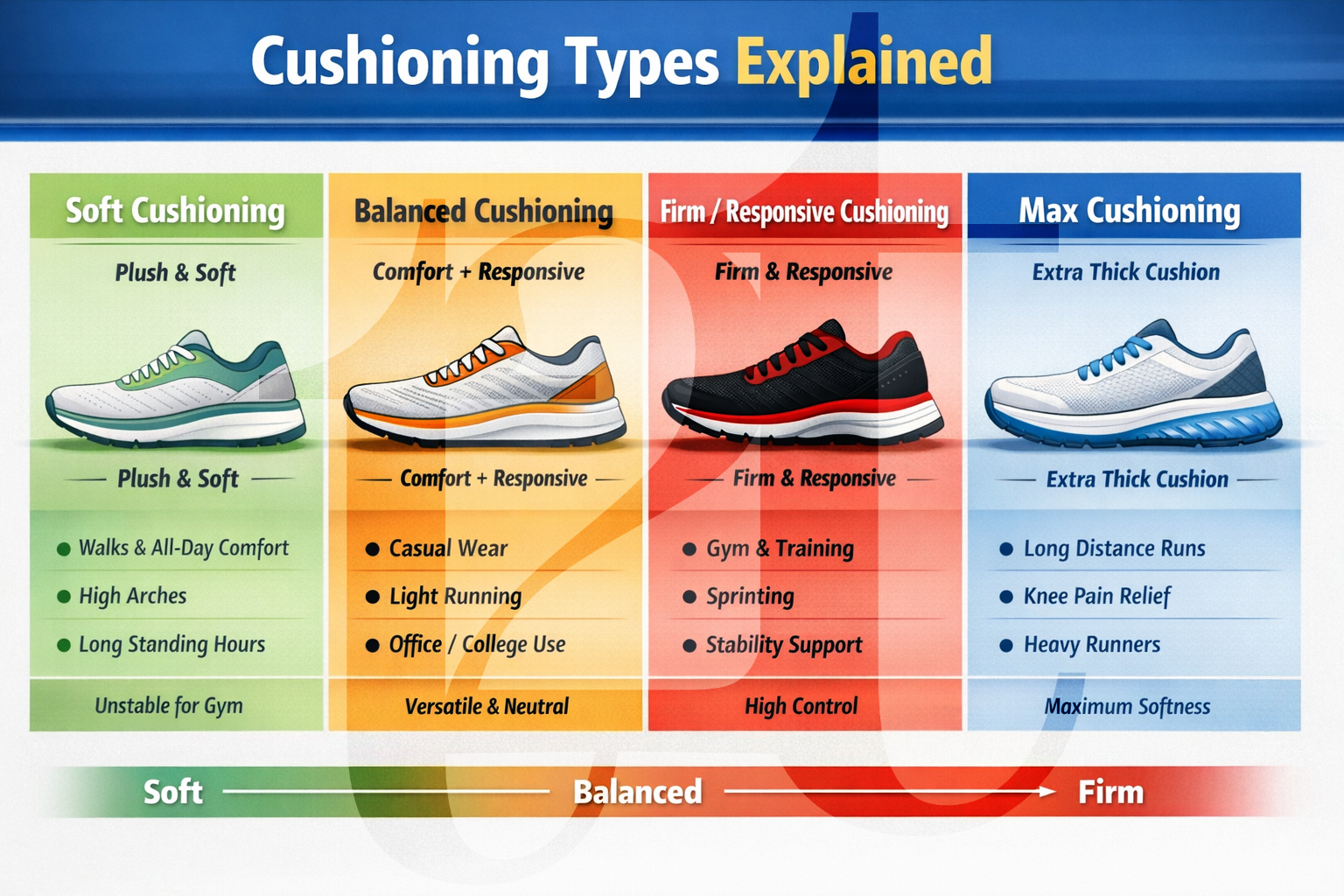
Cushioning determines how your sneaker absorbs shock when your foot hits the ground. There are 4 main types:
Soft Cushioning
🔹 Plush feel, bouncy & comfortable.
Best For: Daily walking, high arches, long standing hours.
Downside: Can feel unstable for gym workouts.
Balanced Cushioning
🔹 Mix of comfort and responsiveness.
Best For: Casual wear, light running, office/college use.
Ideal for most neutral feet.
Firm / Responsive
🔹 Less soft, more energy return.
Best For: Gym, sprinting, stability needs.
Max Cushioning
🔹 Thick midsole, maximum shock absorption.
Best For: Long-distance running, knee pain, heavy runners.
🖼 Cushioning Comparison Diagram
Side view of sneaker outlines showing different midsole thicknesses (Soft | Balanced | Firm | Max).
2. EVA vs Foam Midsole
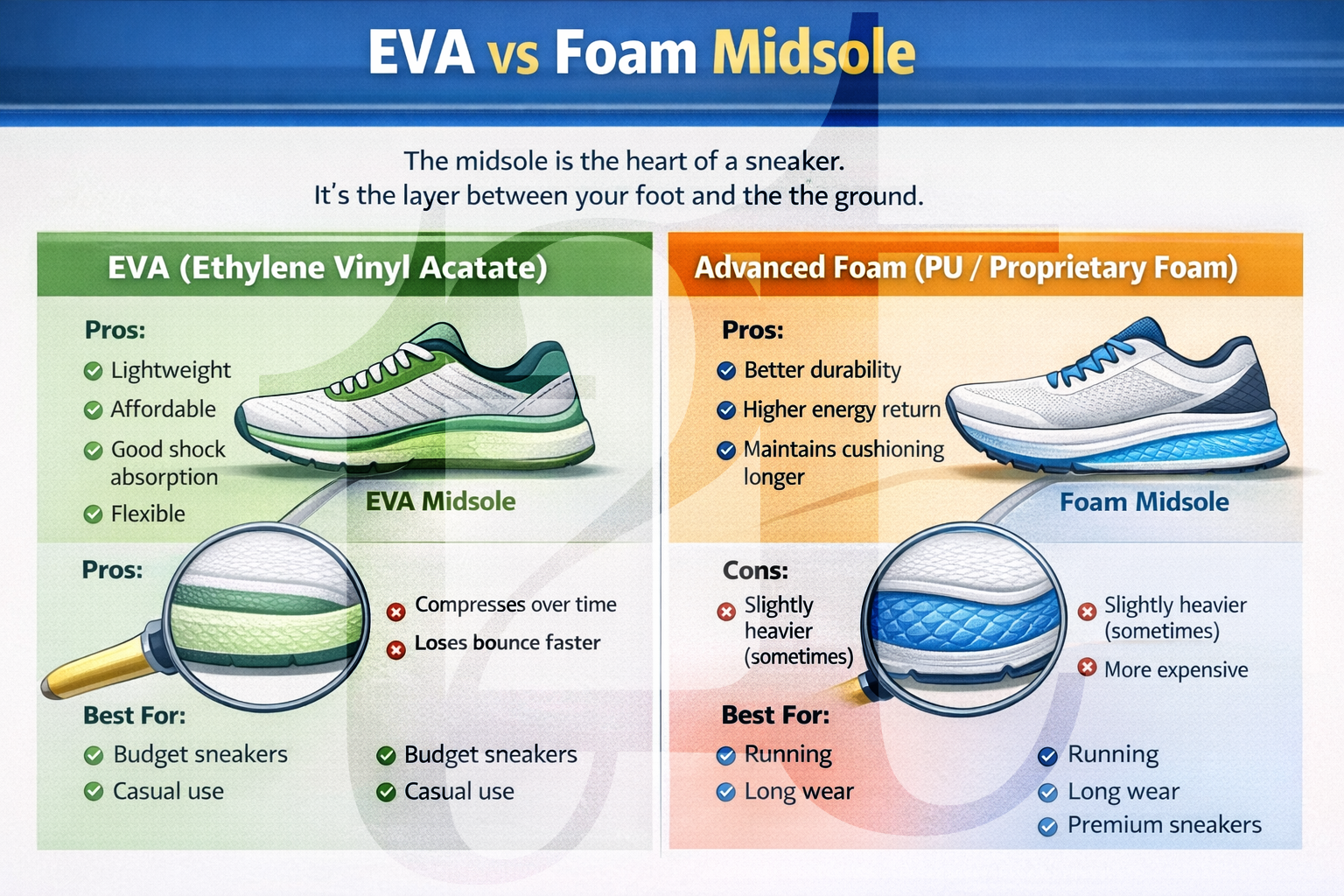
The midsole is the heart of a sneaker. It’s the layer between your foot and the ground.
🔹 EVA (Ethylene Vinyl Acetate)
Most common material in sneakers.
- Pros: Lightweight, affordable, good shock absorption.
- Cons: Compresses over time, loses bounce faster.
Best For: Budget sneakers, casual use.
🔹 Advanced Foam
Includes PU, Energy return, Memory, and Boost-style foams.
- Pros: Better durability, higher energy return, maintains cushioning longer.
- Cons: Slightly heavier (sometimes), more expensive.
Best For: Running, long wear, premium sneakers.
🖼 Midsole Cutaway Diagram
Highlighting Upper, Insole, Midsole (EVA vs Advanced Foam), and Outsole.
3. Mesh vs Synthetic Upper
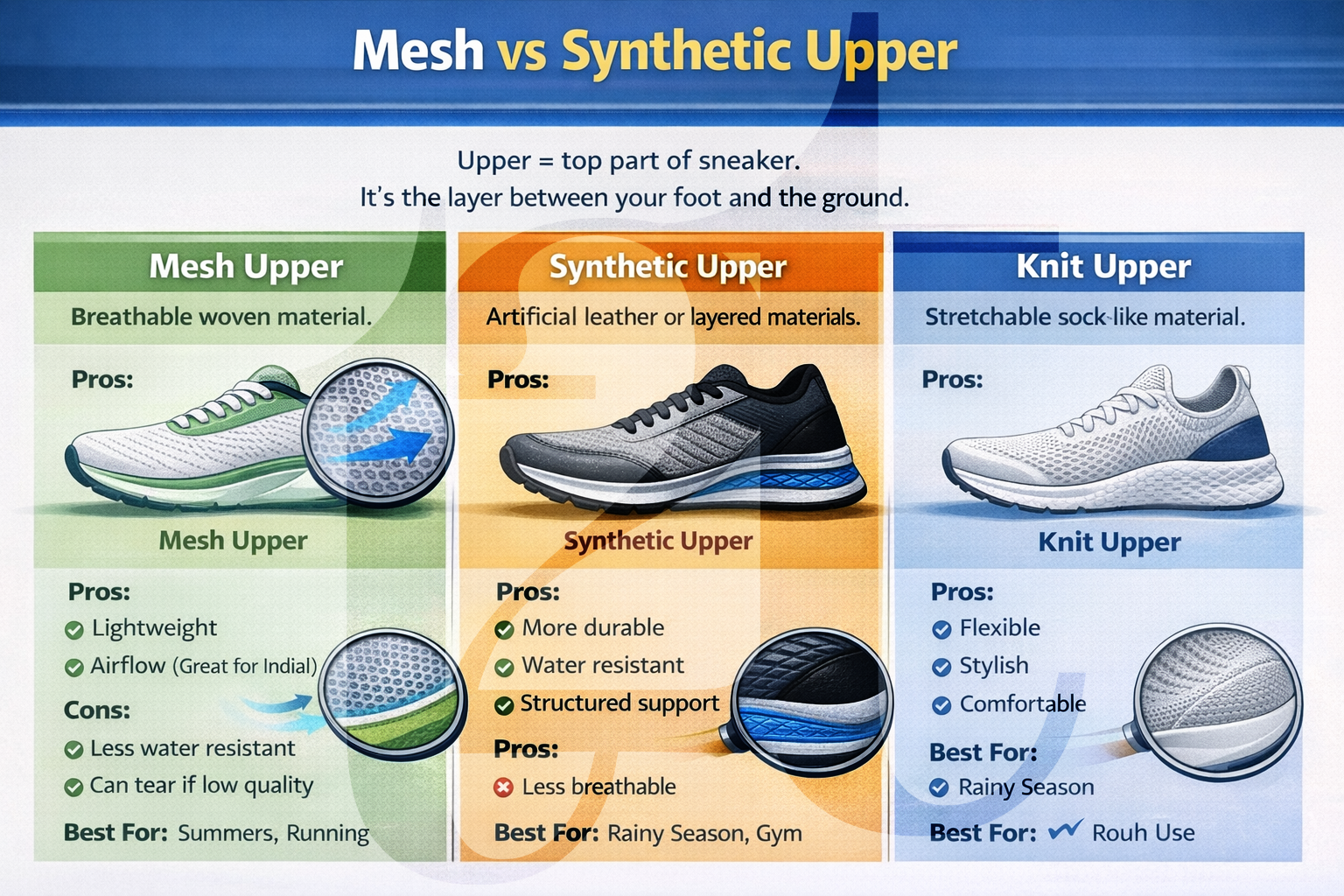
Upper = top part of sneaker.
🔹 Mesh Upper
Breathable woven material.
- Pros: Lightweight, airflow (Great for India!).
- Cons: Less water resistant, can tear if low quality.
Best For: Summers, running, daily wear.
🔹 Synthetic Upper
Artificial leather or layered materials.
- Pros: More durable, water resistant, structured support.
- Cons: Less breathable, can feel warm.
Best For: Rainy season, gym, rough use.
🔹 Knit Upper
Stretchable sock-like material.
- Pros: Flexible, stylish, comfortable.
- Cons: Less support for flat feet.
🖼 Upper Material Comparison
Mesh (airflow arrows) vs Synthetic (solid structure) vs Knit (stretch arrows).
4. How Long Do Sneakers Last?
Average lifespan depends on usage:
| Usage Type |
Estimated Lifespan |
| Daily casual |
8–12 months |
| Running (regular) |
500–800 km |
| Gym use |
6–10 months |
| Occasional use |
1–2 years |
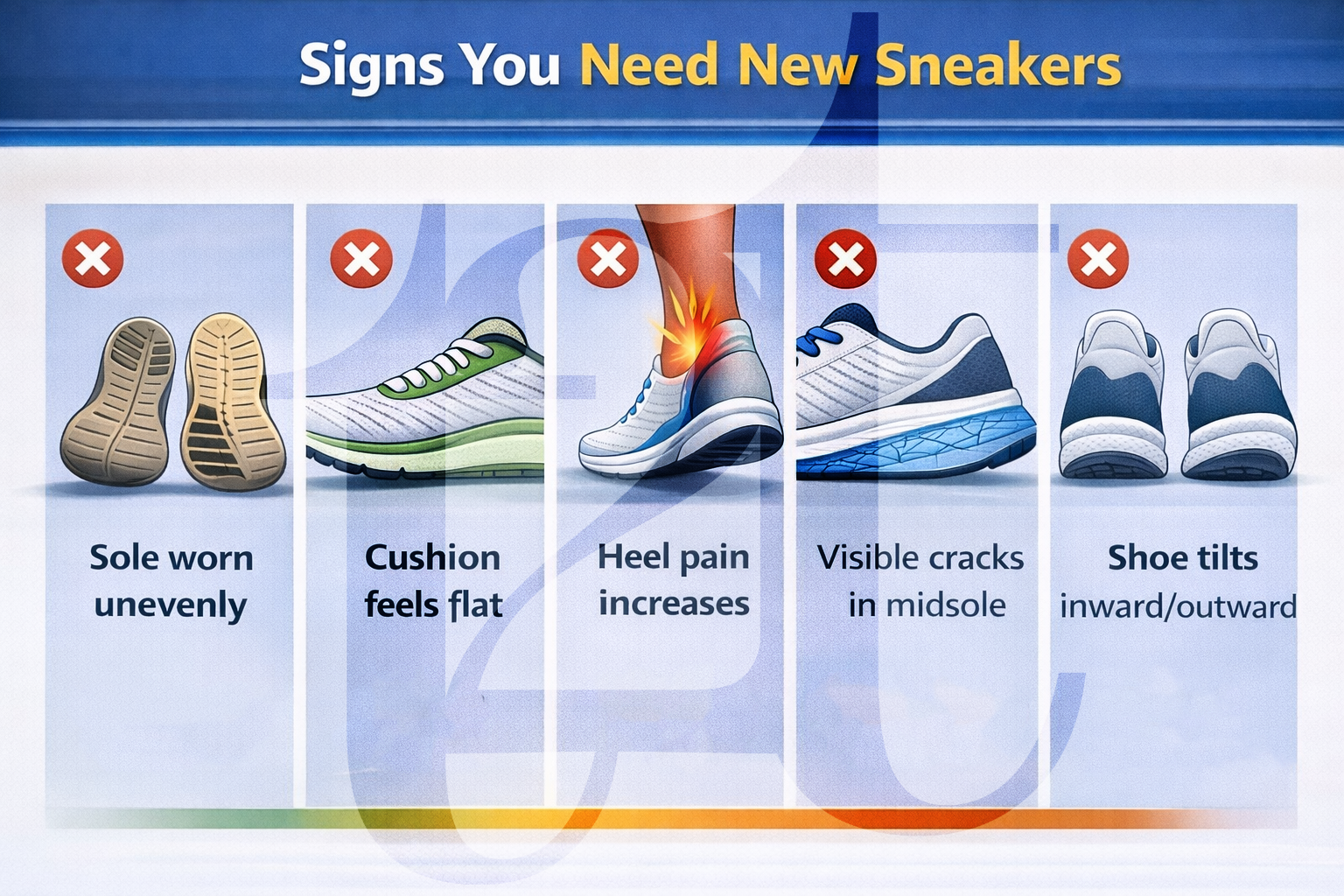
Signs You Need New Sneakers:
- Sole worn unevenly
- Cushion feels flat
- Heel pain increases
- Visible cracks in midsole
- Shoe tilts inward/outward
🖼 Wear Pattern Comparison
Worn sole (uneven) vs New sole.
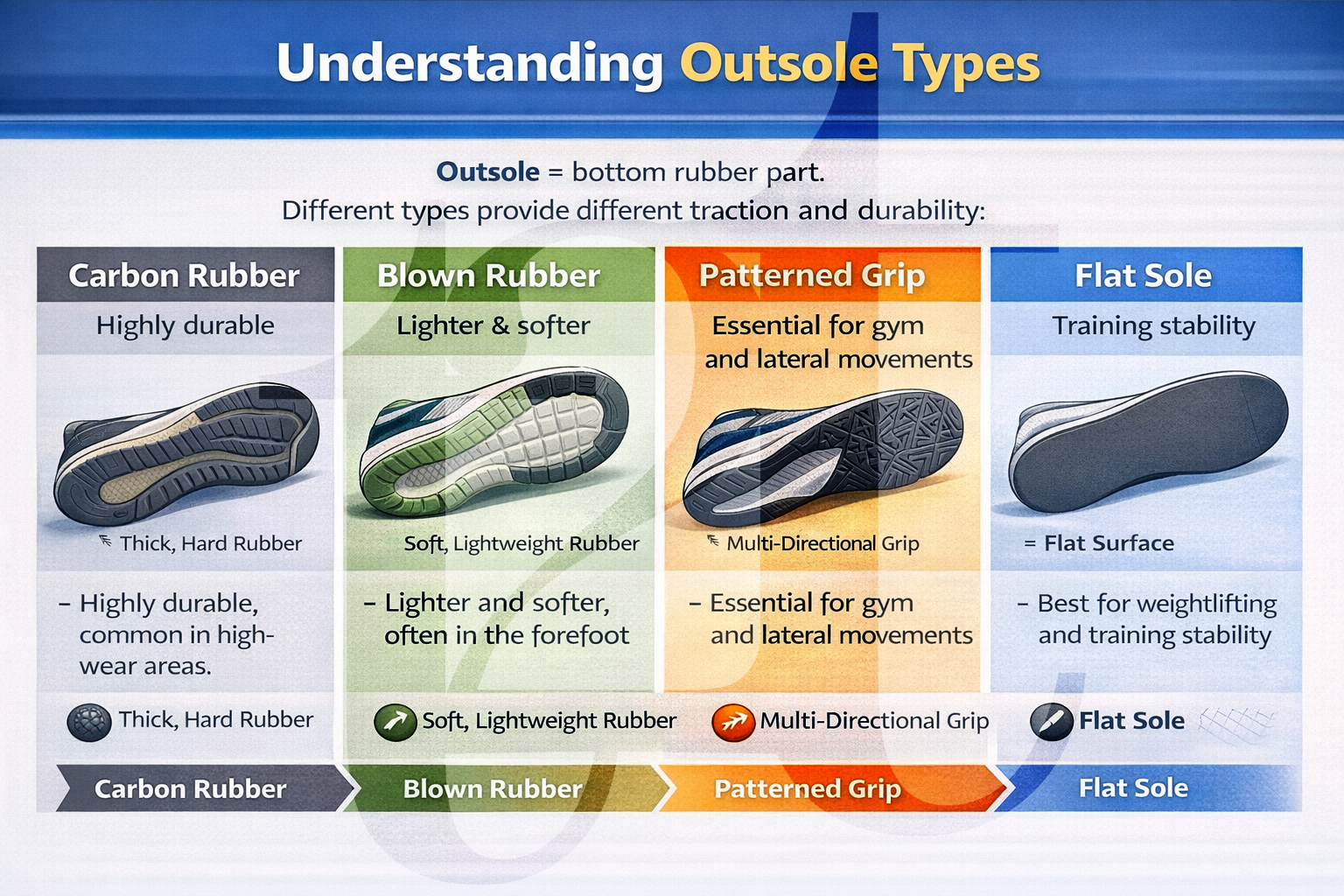
5. Understanding Outsole Types
Outsole = bottom rubber part. Different types provide different traction and durability:
- Carbon rubber: Highly durable, common in high-wear areas.
- Blown rubber: Lighter and softer, often in the forefoot.
- Patterned grip: Essential for gym and lateral movements.
- Flat sole: Best for weightlifting and training stability.
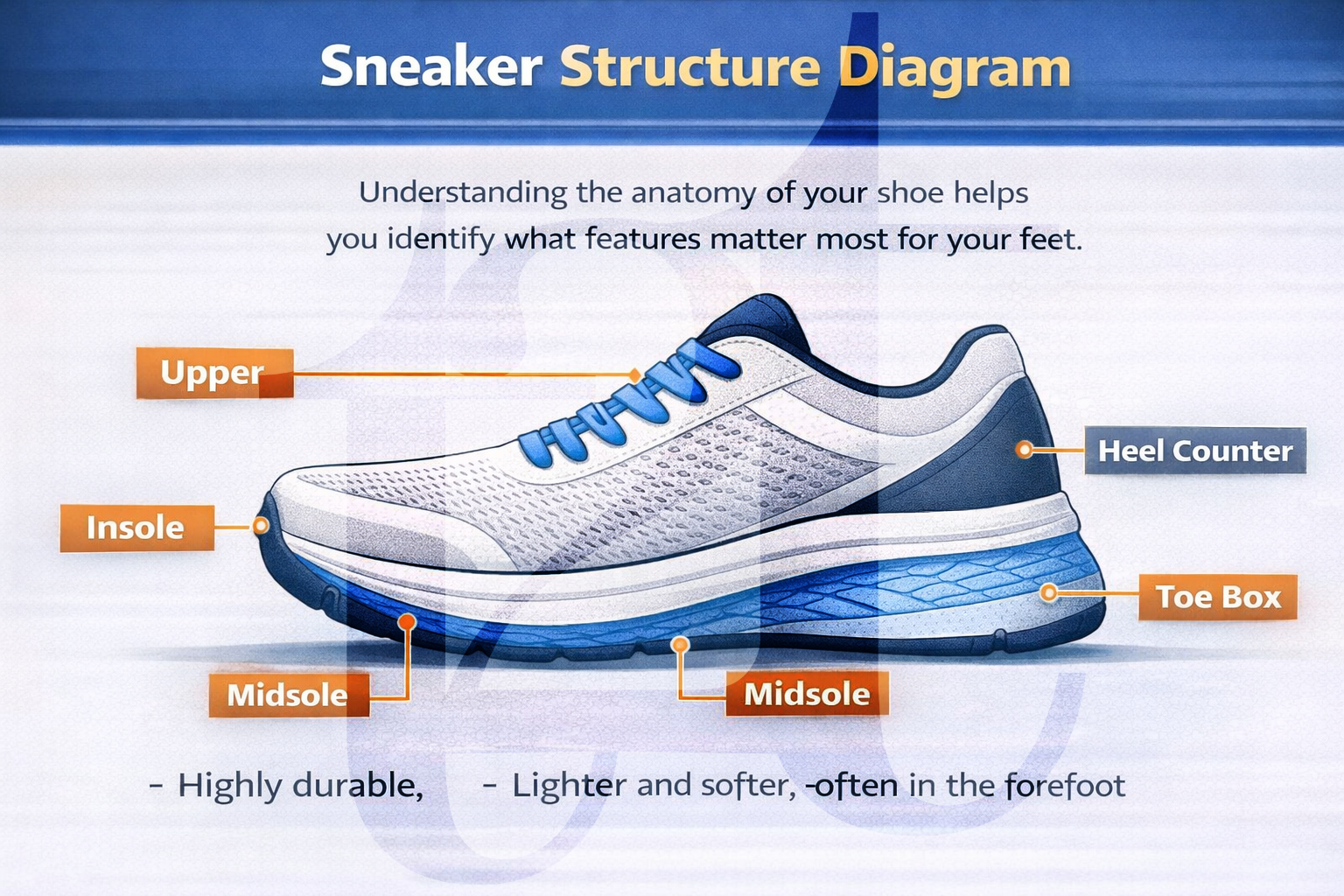
6. Sneaker Structure Diagram
Understanding the anatomy of your shoe helps you identify what features matter most for your feet.
🖼 Main Educational Graphic
Labeled diagram showing: Upper, Insole, Midsole, Outsole, Heel Counter, and Toe Box.
शैक्षिक गाइड • टेंड2ट्रेंड (Tend2Trend)
स्नीकर एकेडमी
स्नीकर्स खरीदना सिर्फ स्टाइल के बारे में नहीं है। कुशनिंग, मिडसोल, सामग्री और टिकाऊपन को समझने से आपको अपनी जीवनशैली के लिए सही स्नीकर चुनने में मदद मिल सकती है।
यह क्यों सीखें?
- पैरों के दर्द से बचें
- आराम में सुधार करें
- जूतों को लंबे समय तक चलाएं
- अपनी जीवनशैली के लिए सही स्नीकर चुनें
1. कुशनिंग के प्रकार (Cushioning Types Explained)
कुशनिंग यह निर्धारित करती है कि जब आपका पैर जमीन से टकराता है तो आपका स्नीकर झटके को कैसे सोखता है। इसके 4 मुख्य प्रकार हैं:
सॉफ्ट कुशनिंग (Soft Cushioning)
🔹 बहुत आरामदायक और उछालभरी महसूस होती है।
सबसे अच्छा: दैनिक पैदल चलना, उच्च आर्च, लंबे समय तक खड़े रहना।
नुकसान: जिम वर्कआउट के लिए अस्थिर महसूस हो सकता है।
संतुलित कुशनिंग (Balanced Cushioning)
🔹 आराम और प्रतिक्रिया (responsiveness) का मिश्रण।
सबसे अच्छा: कैजुअल वियर, हल्की दौड़, ऑफिस/कॉलेज उपयोग।
अधिकांश सामान्य पैरों के लिए आदर्श।
फर्म / रिस्पॉन्सिव (Firm / Responsive)
🔹 कम नरम, अधिक ऊर्जा वापसी।
सबसे अच्छा: जिम, स्प्रिंटिंग, स्थिरता की आवश्यकता।
मैक्स कुशनिंग (Max Cushioning)
🔹 मोटा मिडसोल, अधिकतम शॉक एब्जॉर्प्शन।
सबसे अच्छा: लंबी दूरी की दौड़, घुटने का दर्द, भारी धावक।
🖼 कुशनिंग तुलना आरेख
विभिन्न मिडसोल मोटाई (सॉफ्ट | संतुलित | फर्म | मैक्स) दिखाने वाले स्नीकर की रूपरेखा।
2. ईवा (EVA) बनाम फोम मिडसोल
मिडसोल स्नीकर का दिल है। यह आपके पैर और जमीन के बीच की परत है।
🔹 ईवा (Ethylene Vinyl Acetate)
स्नीकर्स में सबसे आम सामग्री।
- फायदे: हल्का, किफायती, अच्छा शॉक एब्जॉर्प्शन।
- नुकसान: समय के साथ दब जाता है, जल्दी अपनी उछाल खो देता है।
सबसे अच्छा: बजट स्नीकर्स, कैजुअल उपयोग।
🔹 एडवांस्ड फोम (Advanced Foam)
इसमें PU, एनर्जी रिटर्न, मेमोरी और बूस्ट-स्टाइल फोम शामिल हैं।
- फायदे: बेहतर टिकाऊपन, अधिक ऊर्जा वापसी, लंबे समय तक कुशनिंग बनाए रखता है।
- नुकसान: थोड़ा भारी (कभी-कभी), अधिक महंगा।
सबसे अच्छा: दौड़ना, लंबे समय तक पहनना, प्रीमियम स्नीकर्स।
🖼 मिडसोल कटअवे आरेख
अपर, इनसोल, मिडसोल (ईवा बनाम एडवांस्ड फोम) और आउटसोल को हाइलाइट करना।
3. मेश (Mesh) बनाम सिंथेटिक अपर
अपर = स्नीकर का ऊपरी हिस्सा।
🔹 मेश अपर (Mesh Upper)
सांस लेने योग्य बुने हुए पदार्थ से बना।
- फायदे: हल्का, हवादार (भारत के लिए बढ़िया!)।
- नुकसान: कम जल प्रतिरोधी, कम गुणवत्ता होने पर फट सकता है।
सबसे अच्छा: गर्मी का मौसम, दौड़ना, दैनिक उपयोग।
🔹 सिंथेटिक अपर (Synthetic Upper)
कृत्रिम चमड़े या परतों वाली सामग्री से बना।
- फायदे: अधिक टिकाऊ, जल प्रतिरोधी, संरचित समर्थन।
- नुकसान: कम हवादार, गर्म महसूस हो सकता है।
सबसे अच्छा: बारिश का मौसम, जिम, रफ उपयोग।
🔹 निट अपर (Knit Upper)
खिंचावदार मोजे जैसी सामग्री।
- फायदे: लचीला, स्टाइलिश, आरामदायक।
- नुकसान: सपाट पैरों के लिए कम समर्थन।
🖼 अपर सामग्री तुलना
मेश (हवा के प्रवाह वाले तीर) बनाम सिंथेटिक (ठोस संरचना) बनाम निट (खिंचाव वाले तीर)।
4. स्नीकर्स कितने समय तक चलते हैं?
औसत जीवनकाल उपयोग पर निर्भर करता है:
| उपयोग का प्रकार |
अनुमानित जीवनकाल |
| दैनिक कैजुअल |
8–12 महीने |
| दौड़ना (नियमित) |
500–800 किमी |
| जिम उपयोग |
6–10 महीने |
| कभी-कभी उपयोग |
1–2 वर्ष |
संकेत कि आपको नए स्नीकर्स की आवश्यकता है:
- सोल असमान रूप से घिसा हुआ
- कुशन सपाट महसूस होता है
- एड़ी का दर्द बढ़ जाता है
- मिडसोल में स्पष्ट दरारें
- जूता अंदर या बाहर की ओर झुकता है
🖼 घिसावट पैटर्न तुलना
घिसा हुआ सोल (असमान) बनाम नया सोल।
5. आउटसोल के प्रकारों को समझना
आउटसोल = नीचे का रबर वाला हिस्सा। विभिन्न प्रकार अलग-अलग कर्षण (traction) और स्थायित्व प्रदान करते हैं:
- कार्बन रबर (Carbon rubber): अत्यधिक टिकाऊ, अधिक घिसने वाले क्षेत्रों में आम।
- ब्लोन रबर (Blown rubber): हल्का और नरम।
- पैटर्न वाली ग्रिप (Patterned grip): जिम और पार्श्व गतिविधियों के लिए आवश्यक।
- फ्लैट सोल (Flat sole): वेटलिफ्टिंग और ट्रेनिंग स्थिरता के लिए सबसे अच्छा।
6. स्नीकर संरचना आरेख
अपने जूते की संरचना को समझने से आपको यह पहचानने में मदद मिलती है कि आपके पैरों के लिए कौन सी विशेषताएं सबसे अधिक मायने रखती हैं।
🖼 मुख्य शैक्षिक ग्राफिक
लेबल किया गया आरेख: अपर, इनसोल, मिडसोल, आउटसोल, हील काउंटर और टो बॉक्स।